
Most marketers know AI is going to change how they work. The hard part is building the practical skills and confidence to apply it well in their day-to-day. A recent survey found that 74% of marketers say AI will be critically or very important to their marketing in 2026, yet 68% report that their company provides no formal AI training.
The AI + Marketing Bootcamp is designed to close that gap. It's a practical, hands-on program that helps marketing teams build the foundation to apply AI in real work. Each engagement is customized to the client's industry, goals, and team. What follows below is the core shape of the course. The content, examples, and emphasis are tailored to fit, and most engagements include additional areas of focus based on what the team actually needs to learn.
AI + Marketing Bootcamp
Course Overview
This course gives marketing teams a practical, up-to-date understanding of how AI can be applied in real marketing work. Participants learn to identify high-impact use cases, explore current AI tools, and craft effective prompts. The program is highly interactive and engaging, with a focus on hands-on, real-world application. It also covers how to test, adopt, and scale AI responsibly, with attention to risks and ethics.
Course Objectives
After completing the course, participants will understand:
What AI is and how it applies to marketing today
The main use cases for AI in marketing campaigns and workflows
What AI tools and techniques are available to use today
How to craft effective prompts for generative AI tools
The main considerations for teams trialing and scaling AI
Course Structure
The course is built around four modules. Each can be delivered as a standalone session or as part of a multi-day program. Most engagements include additional content tailored to the client's industry, tools, and team priorities.
Module 1: An Introduction to AI for Marketers
A not-so-technical explanation of what AI is and how it works
The capabilities, advantages, and challenges of AI for marketers
The current state of how marketing teams use AI
The most common use cases and tools used by marketing teams
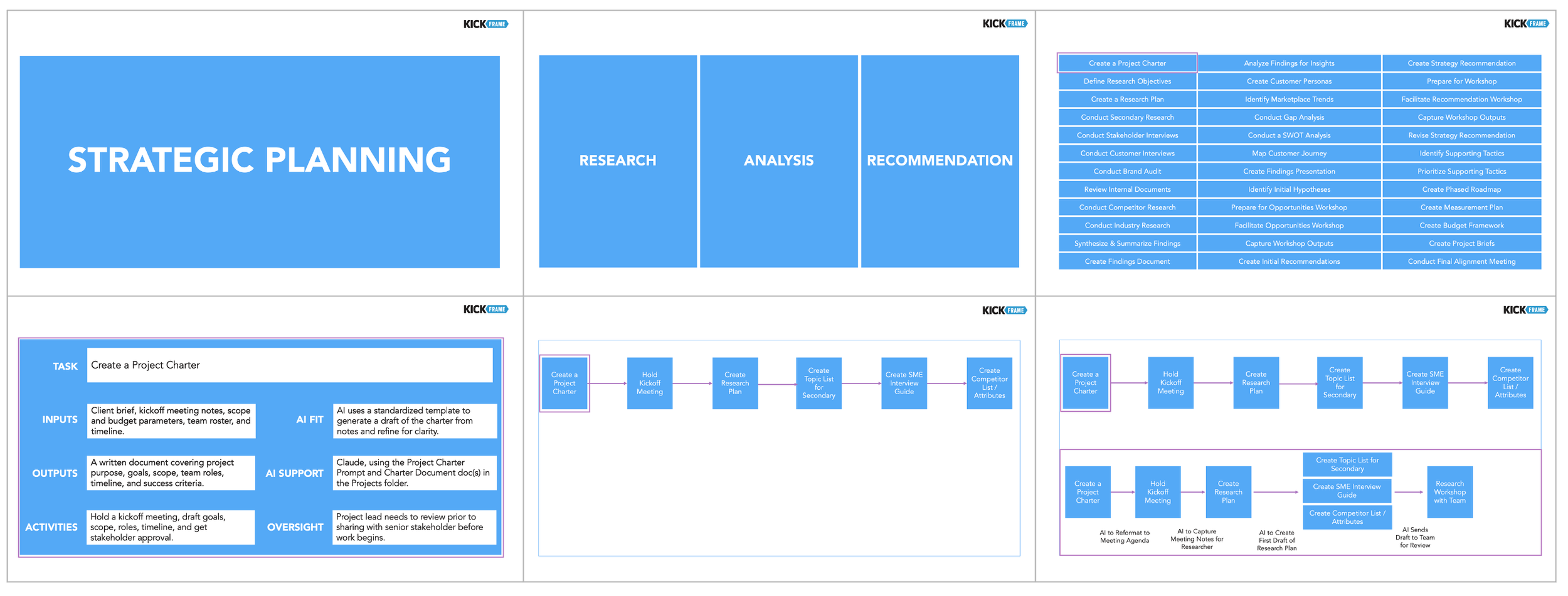
A framework for identifying AI use cases for your marketing team
Activity | Spot the AI Advantage: Groups explore a business scenario to identify where AI can improve marketing performance by making work faster, smarter, and more effective.
Module 2: Prompting & Marketing Planning
A not-so-technical explanation of large language models
How to effectively work with a frontier model (e.g., ChatGPT)
A framework for crafting an effective prompt for generative AI
How AI can be used to help with research, analysis, and ideation
The AI tools and types of prompts to help in marketing planning
Activity | Prompt Jam - Build a Campaign with AI: Groups use ChatGPT to brainstorm campaign ideas from a real brief, experimenting with prompts to spark fresh, creative, and actionable marketing concepts.
Module 3: Content & Marketing Execution
The most common use cases and AI tools available for content creation
How AI can assist in images and video for marketers
How AI can assist in writing and editing for marketers
How AI can assist in voice and sound for marketers
How AI can help marketers scale campaign asset production
Activity | Create It with AI: Groups select an AI tool to design a campaign asset, showcasing how AI boosts creativity, speed, and quality in marketing execution.
Module 4: Marketing Management & Starting
The most common use cases and agents for marketing operations
The risks and ethical considerations of AI marketers be aware of
How teams can start testing, learning, and adopting AI over time
How to effectively evaluate and onboard new AI tools for marketers
What future AI trends and technologies should be on a marketer’s radar
Activity | From Ideas to Action: Participants identify their biggest AI opportunities, risks, and next steps, building a clear plan to start applying AI effectively in marketing.
Course Delivery
Each module takes about 90 to 120 minutes, including group activities and facilitated discussions. The course can be delivered as four separate modules (for example, one per day) or as a full-day session covering all modules together. It is available both online and in person. All course materials and group activities can be customized to fit the specific needs and business context of the participating marketing team.
Want to bring AI + Marketing Bootcamp to your team?