
How is AI impacting commerce? New studies show the impact of AI chatbots in driving motivated shoppers to retail websites, specifically:
More traffic: 15% of total referral traffic for Walmart in September was from ChatGPT
More engagement: GenAI traffic spends 32% more time on retailer websites than non-AI visitors
More growth: >50% of consumers anticipate using AI assistants for shopping by the end of 2025
But why stop at driving traffic to retailers when you can have customers checkout on your own platform? OpenAI is following the playbook of Meta and others – allowing users to buy directly through ChatGPT while taking a cut from merchants and collecting valuable data. “Buy It in ChatGPT,” lets people check out instantly from merchants like Etsy and Spotify. Walmart’s also on board.
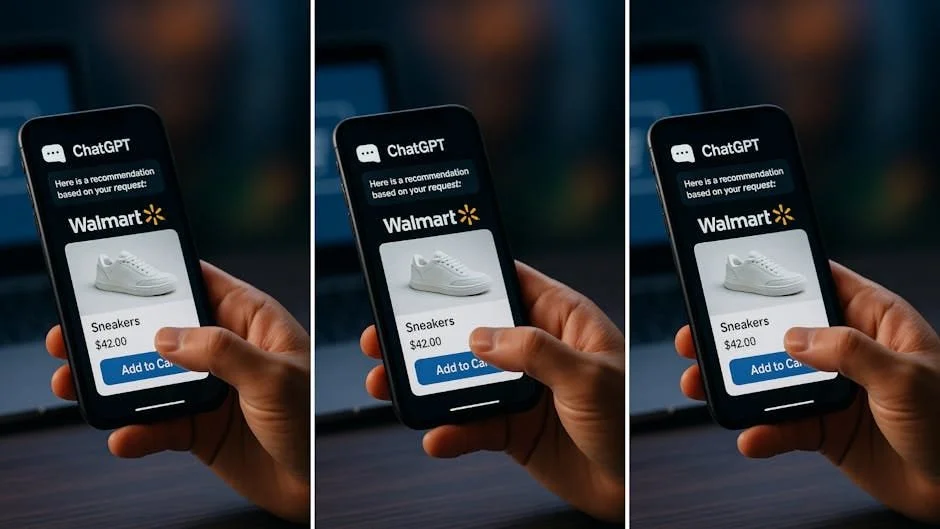
This raises some big questions. Will retailers that spent years and millions building their own online stores lose direct access with their customers and first-party data? And will they now need to rethink their setup to treat AI agents as their new “customers”? It’s easy to envision a sort-of ChatGPT.shop app or mode launching soon.
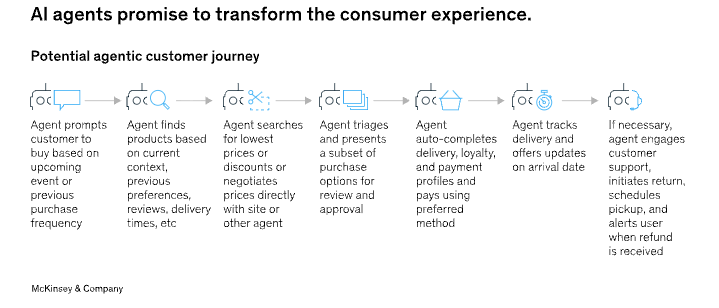
AI & ADVERTISING
So, what should advertisers do about it? Many of the same principles as traditional SEO still apply, but with a few wrinkles:
Since most product research happens at the lower end of the funnel, ensure product information is detailed, accurate, and structured for AI retrieval in response to lower-funnel questions.
Recognize that search engines still dominate online discovery time, and Google will soon default people into AI mode for more complex queries – including those that are shopping-related.
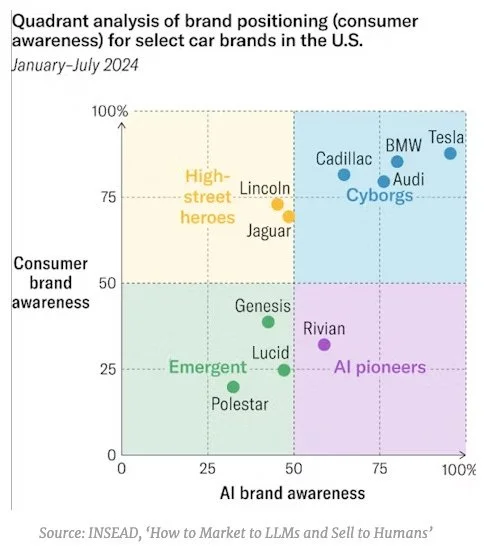
Track your “share of model.” Some brands are well-known to people but under-represented in AI-generated answers, and vice-versa.
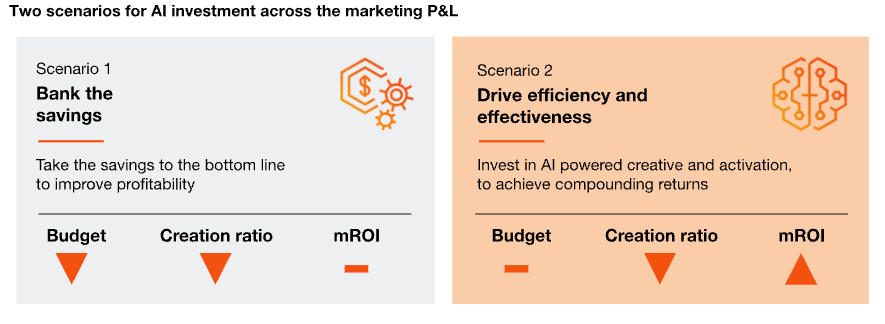
The more interesting question is how to use AI overall as a marketer: as a tool for efficiency or for growth. PwC argues for both - using cost savings to invest in effectiveness and upstream innovation. For example, Lavazza built AI-driven personas from 5,000 customer interviews, making insights more interactive and accessible for teams. Don’t limit your AI exploration to doing more of the same with less.
FREE TOOLS & RESOURCES FOR STRATEGISTS
A few smart, generous strategists have opened their Google Drives (and hearts!) and are sharing great resources to help fellow strategists:
Creative Strategy Starters (Rat-thew Kilgour, not sure if that’s his real name but I love it): Great thought-starters for facilitating a creative brainstorm.
The Strategist’s Playbook (Jasmine Bina and JL Rawlence): Collection of popular strategy frameworks put into a cultural context.
Sweathead Strategy Resources (Mark Pollard): Mark is a prolific strategy writer and has opened up his archive – loads of templates, examples, and inspiration to explore.
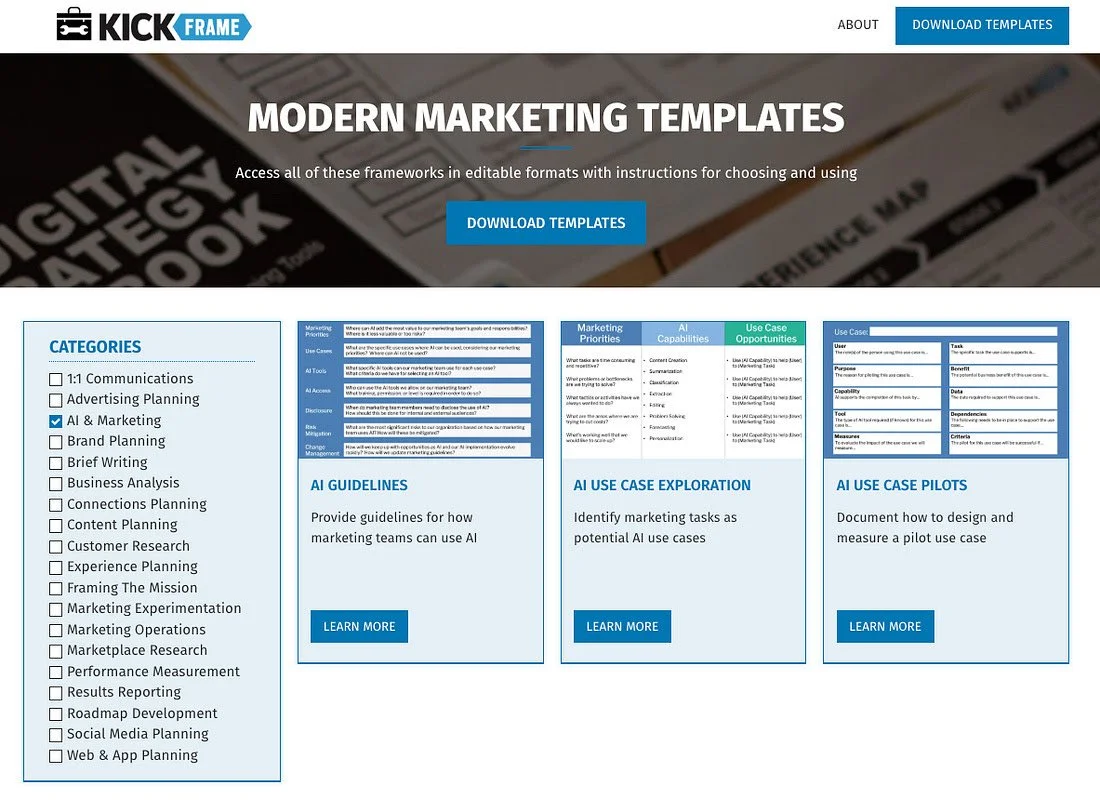
And if you’re looking for more strategy boxes, circles, and arrows check out the KickframeToolbox.com with over 50 modern marketing frameworks, all free to download and edit.
FRESH AI RESEARCH
The State of AI (McKinsey): Paints a picture of corporate AI as widespread, but not deep. The business units that report the greatest revenue gains are marketing and sales.
2025 AI Adoption Report (Wharton): The business tasks that have seen the highest jumps over the last year are Presentation and Report Creation and Idea Generation and Brainstorming.How People Around the World View AI (Pew): 45% of Canadians say they feel more concerned than excited about AI, while only 9% feel more excited than concerned — a level of concern that exceeds the global median.
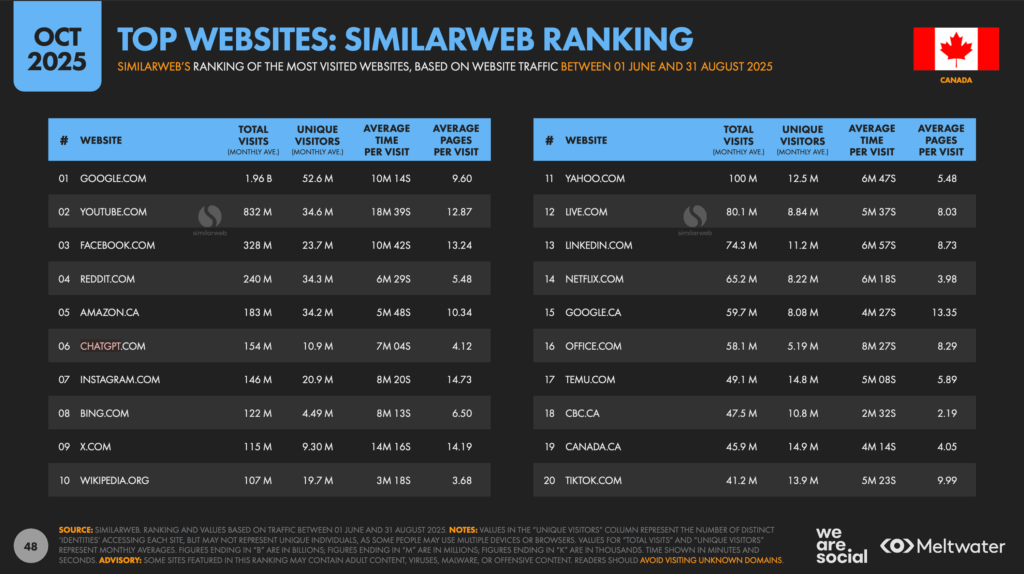
Digital 2026 Canada (We are Social): Great compilation of Canada-specific digital statistics, including ChatGPT jumping from the 12th to the 6th most visited website in Canada.
COOL BEANS
Neo The Home Robot: A new AI-powered robot maid is now available for pre-order, shipping in 2026 for $20,000.
Helix The Flying Car: A new flying car is now available is now available for pre-order, shipping in 2026 for $200,000.