
A lot of my time these days goes into helping teams upskill on AI: finding practical applications, exploring new ways to work. One thing that keeps coming up in these engagements is that while people know most of the AI terms, they have a hard time fitting them together into a mental model.
I recently walked a team through a slide to give them a shared starting point. I’m sharing it below in case you or your team are wrestling with the same thing.
Here is the slide to download. If you think your team could benefit from AI training, feel free to reach out (hello@kickframe.com) and I can share what Kickframe’s customized in-house training looks like.
AI & Critical Thinking
Another thing that comes up pretty much every time I run an AI training session: someone will sheepishly admit, “I feel like AI is making me dumber.” There’s usually a laugh, and a few nods.
There’s a growing body of research that backs this feeling. AI can lift task performance while quietly reducing the parts of work that make it engaging: ownership, meaning, the sense that the output is yours. The more people lean on AI for a task, the less critical thinking they tend to do, and confidence in the work can rise faster than the quality does. Some early neuroscience work even suggests reduced mental engagement when LLMs do the heavy lifting.
At the same time, most of us know what AI does well: synthesis, analysis, research, drafting, and more. So while the benefits are real, the conversation in the room turns to how we can use AI without offloading our thinking in ways that hurt our work, our teams, and our own engagement and capacity for messy cognitive work.
Here are a few practices I share in my training sessions. Some are grounded in this early research, and all are things I’m working on incorporating into how I work:
Start With Your Own Thinking First: Before opening a chat window, sketch your own view of the problem, hypothesis, or approach, even roughly. Studies on “decide first, then consult” patterns suggest this helps protect you from anchoring to whatever the AI says, and keeps ownership over the result.
Use AI To Challenge, Not To Answer: Instead of asking for output you’ll polish, try asking it to argue against your position, surface weak assumptions, or represent the perspective you’re missing. This is still critical thinking work, and often more of it than you’d do on your own.
Separate Speed Tasks From Thinking Tasks: Not every step of a project deserves the same cognitive investment. Being intentional up front about which parts you’ll move through quickly, and which parts you want to sit in the ambiguity of yourself, helps you avoid drifting into AI use across the whole project.
Recognize That Critical Thinking With AI Looks (And Feels) Different: A 2025 study of knowledge workers found critical thinking doesn’t disappear with AI use, it shifts: toward verifying claims, integrating output with your audience, and investing real effort in the prompt itself. Separate research found ownership of AI-assisted writing rose with prompt effort. The work has shifted shape, not disappeared.
Check In Honestly: Are these outputs actually strong, or do they just look strong? Could I explain this if someone challenged me? Is my independent critique getting weaker? It’s easy to drift into offloading more than you mean to, and over time that can quietly erode both the muscle of critical thinking and the enjoyment of doing it. A question worth asking yourself from time to time: what am I gaining from AI, and what might I be losing?
Fresh Research
2026 Global Digital Report (We Are Social): The mother of all digital media reports just published a mid-year edition. If you’re looking for a stat on digital media use, good chance it’s somewhere in these 605 slides.
Gen Z AI Adoption (Gallup): New survey on shifting Gen Z sentiment toward AI. Adoption is flat but the mood is sliding: excitement is down 14 points to 22%, hopefulness down 9 points to 18%, and anger up 9 points to 31% over the past year.
2026 AI & Digital Trends (Adobe): A survey of both marketers and customers that highlights the gap between the two. For example, 49% of organizations believe customers will eventually want AI agents to be their primary way of interacting with brands, while only 19% of customers agree.
Cool Beans
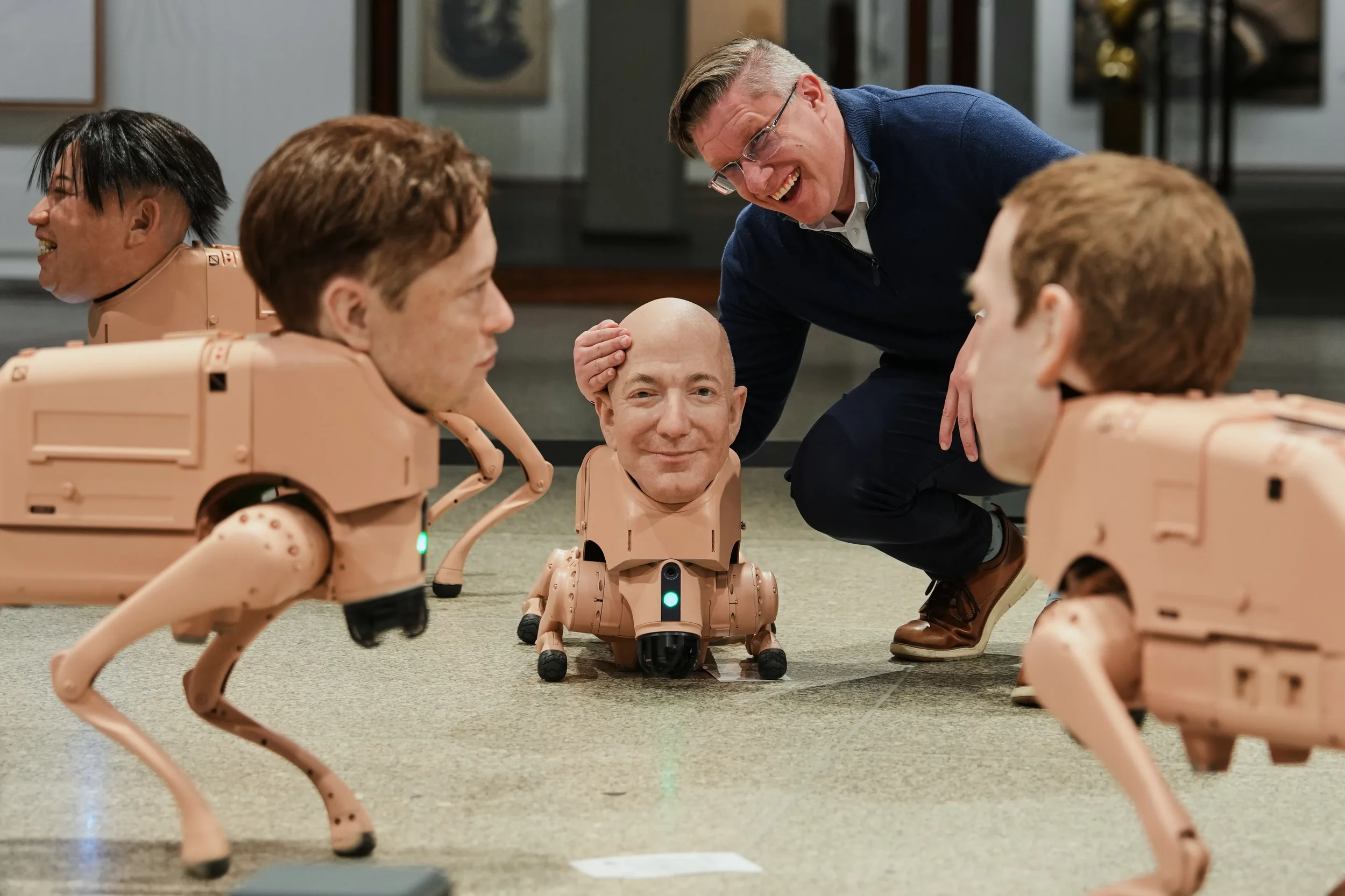
AI-Powered Devices: Samsung launched Project Luna, a smart speaker that swivels to face you when you talk. A new humanoid robot (not the Terminator 2 model) also broke a world record for sprinting, and an artist built robot dogs with the heads of Elon Musk and Mark Zuckerberg, because why not.
NotebookLM Graphic Novels: I’m a regular NotebookLM user and love the Studio features, particularly Mind Map. Now creators are using the tool to generate graphic novels – helping writers and educators make materials more engaging.
AI Jesus & BuddhaBot: For $1.99 a minute you can hop on a video call with an AI avatar of Jesus. Or try BuddhaBot, trained solely on early Buddhist scriptures. And of course, there’s a BuddhaBot Plus.