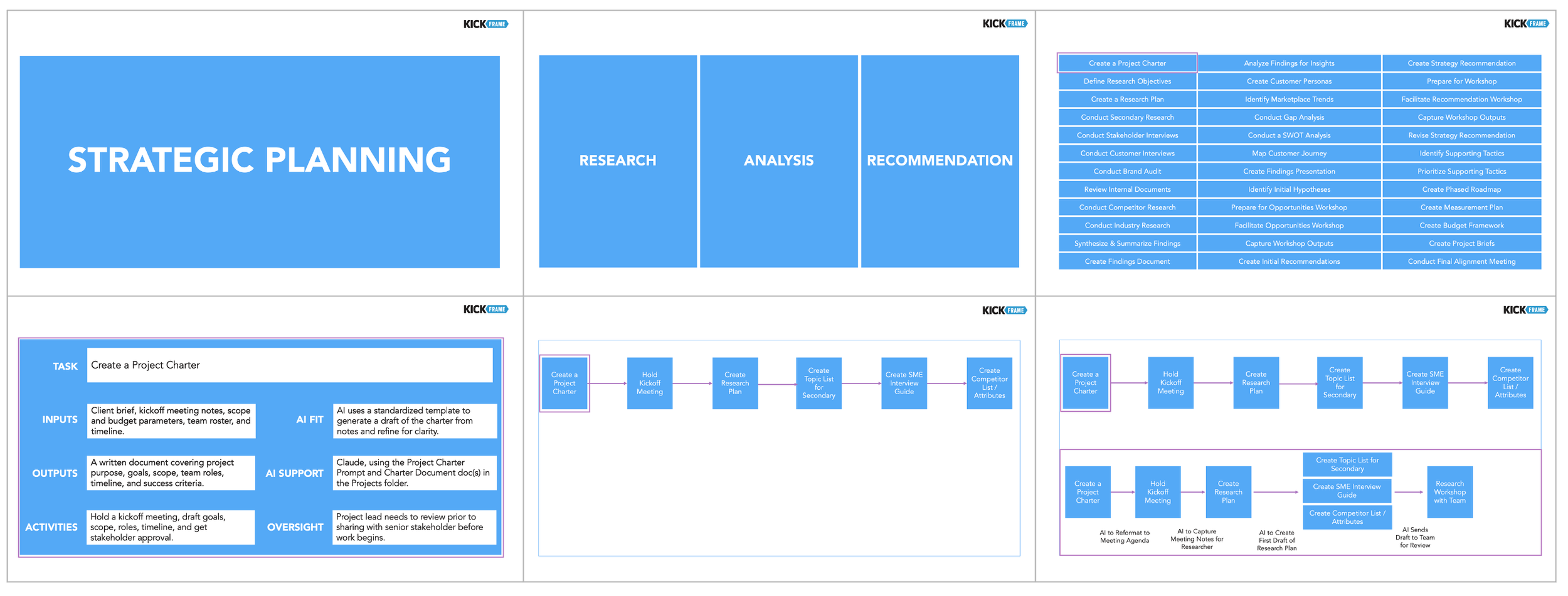
Thanks to those who joined the AI + Strategic Planning for Marketers workshop last week. It was great to hear how people are incorporating AI into their work - particularly the upstream, thinky stuff. Research shows that most marketers are using AI for content creation and analytics - not for ideation or briefing. And for those who are using AI for upstream work, it is mostly as a Google replacement.
One way to find new opportunities is to break down larger areas of work into individual tasks, then look at how each task can be supported by AI. And if it can, the more interesting question becomes: how do we reorganize the work to get to better results? As we discussed during the session, AI adoption is more of a change management challenge than a technical one.
Something I’ve found useful for levelling up AI in planning work is meta-prompting, essentially using prompts to create better prompts. Rather than typing “research this” or “summarize that,” I’m trying to be more intentional about the instructions I give AI to get stronger, more structured outputs. I’ve created a couple of meta-prompts to help. Download the markdown files and give them a try:
Research Prompt Builder: Helps sharpen research focus and define clearer questions before diving in. Use this before conducting secondary research.
Summary Prompt Builder: Helps summarize findings into more useful formats and flag what may have been missed or underweighted. Use this when synthesizing findings from different sources.
If you’re interested in attending the next event, just reach out (hello@kickframe.com) and I’ll add you to the invite list.
AI & Commerce
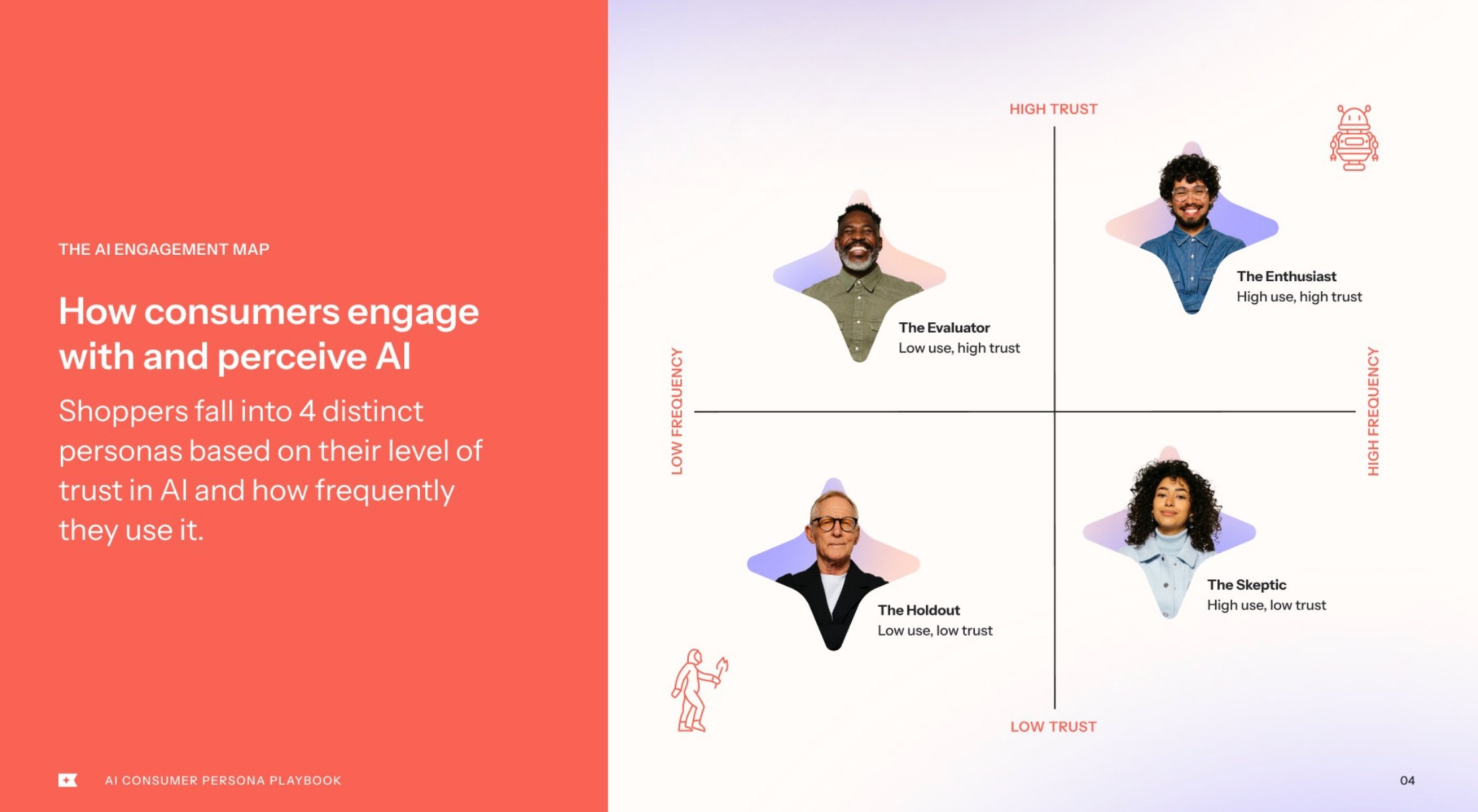
New research confirms what many of us are likely experiencing - consumers are increasingly using AI to research purchase decisions. The challenge for marketers is that 93% of those AI search sessions end without a click through to a brand website. This zero-click trend is increasing as Google AI Overviews now appear in 25% of searches, up from 57% in Q4 2025. This is driving more brands to invest in Answer Engine Optimization (AEO), focusing on being present in sources AI models frequently cite (YouTube, Reddit) and creating content that gets referenced most (guides and product comparisons.) Klaviyo published an interesting playbook for marketers that maps out four personas, each defined by how much they trust AI and how often they use it.
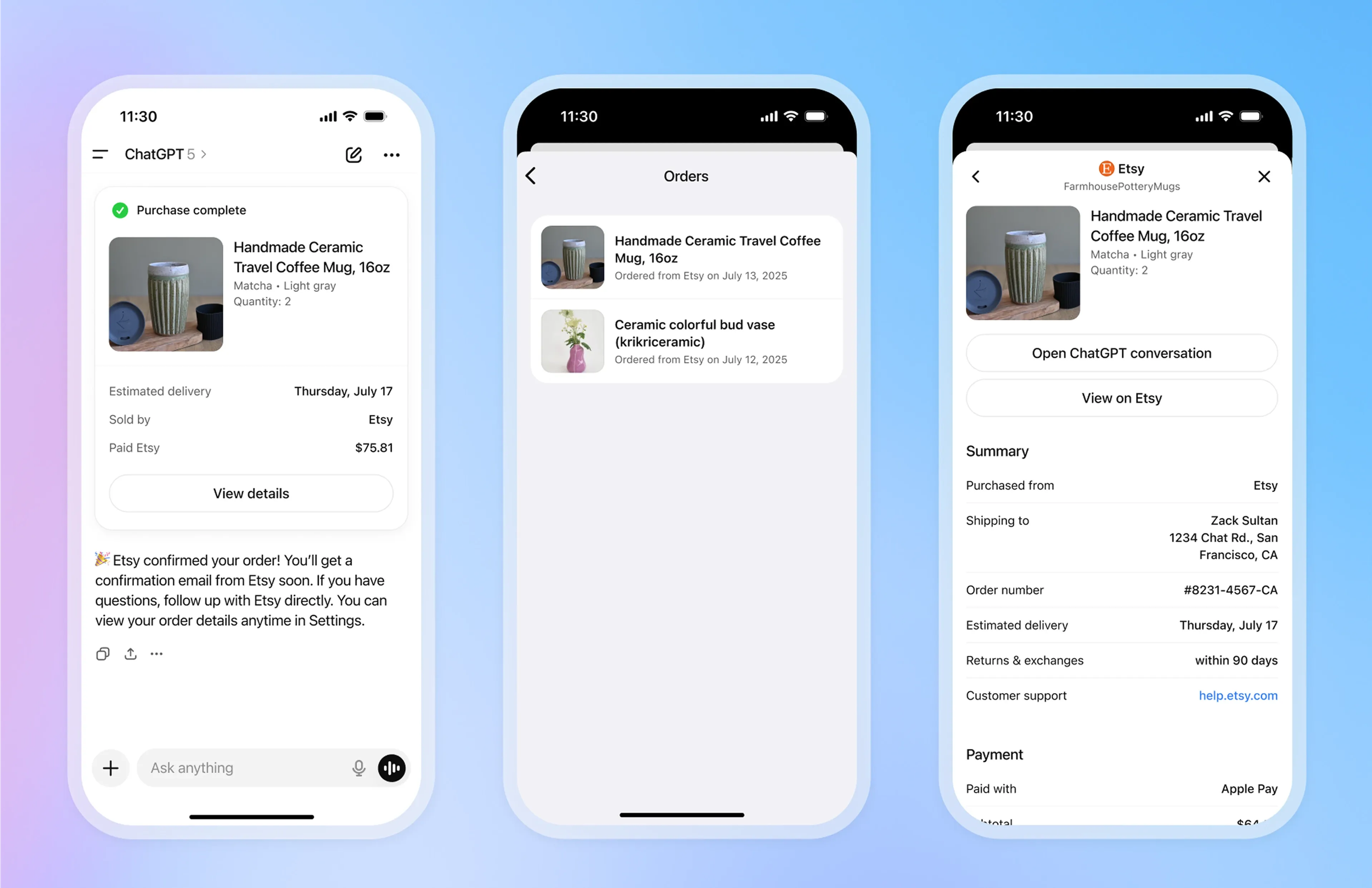
There does appear to be a ceiling, though. Consumers currently use AI primarily upstream in their shopping journey, for research and comparisons. Purchase and post-purchase, not so much. This may explain why OpenAI is pulling back on efforts to allow customers to make purchases directly inside ChatGPT. It feels a lot like Meta’s 15-year-plus attempt to bring commerce into Facebook and Instagram. Unless OpenAI becomes more of an OS like Apple, I can’t see in-chat transactions gaining traction for the same reasons. Don’t ditch that brand website yet, folks.
AI & Work
A couple of new AI-related terms came across my feed this week, both work-related.
The first is “The Fuckening.” It refers to the prediction that AI will lead to massive job loss among knowledge workers. It feels relevant given the recent layoffs at Block, which cut 4,000 workers and saw its stock price increase. The fear is that others will follow suit, even if not warranted (“AI-Washing” – another term). A KPMG survey of CEOs tells a different story: 55% expect to increase hiring this year as a result of AI, and only 9% intend to reduce their workforce. Strange fucken times.
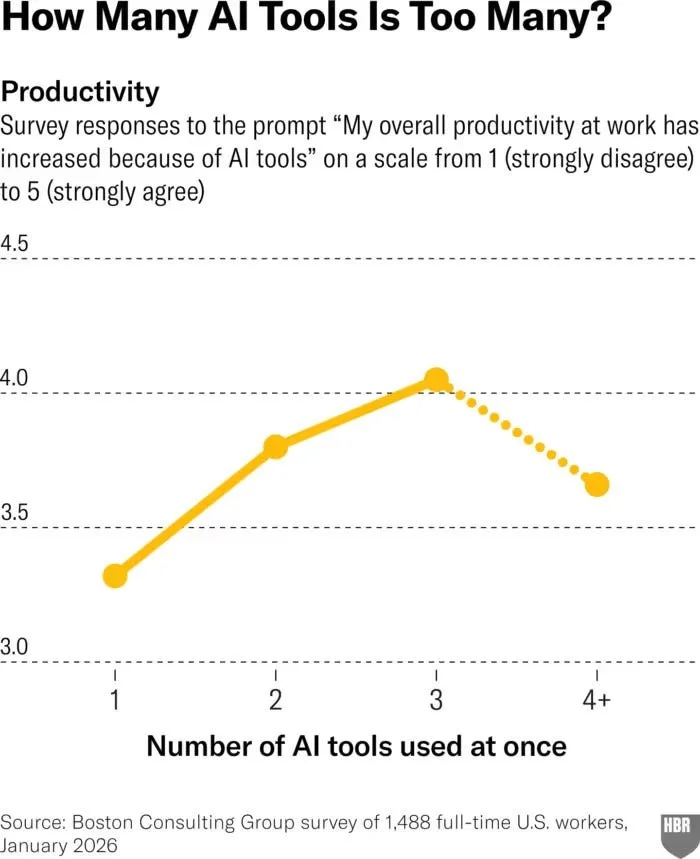
The other term is “Brain Fry,” which refers to mental fatigue from excessive use or oversight of AI tools beyond one’s cognitive capacity. Now this one I relate to. Research shows that people found their overall productivity at work increased when using up to using 3 tools, after which it started to dip. Many described a feeling of “fog” from juggling different tools. Interestingly, this condition cited most in marketing roles, the number one job function experiencing “Brain Fry”.
Cool Beans
Google Maps: Very cool AI enhancements are coming to Google Maps powered by Gemini, including Ask Maps. Users can ask very specific questions like “is there a public tennis court with lights on that I can play at tonight?” Immersive driving also looks very cool.
The Human Flatus Atlas: “A first-of-its-kind nationwide study using Smart Underwear technology to finally quantify the dynamic range of intestinal gas production and explore what these patterns reveal about gut health and the microbiome”. In other words, a new device to measure how often people fart.
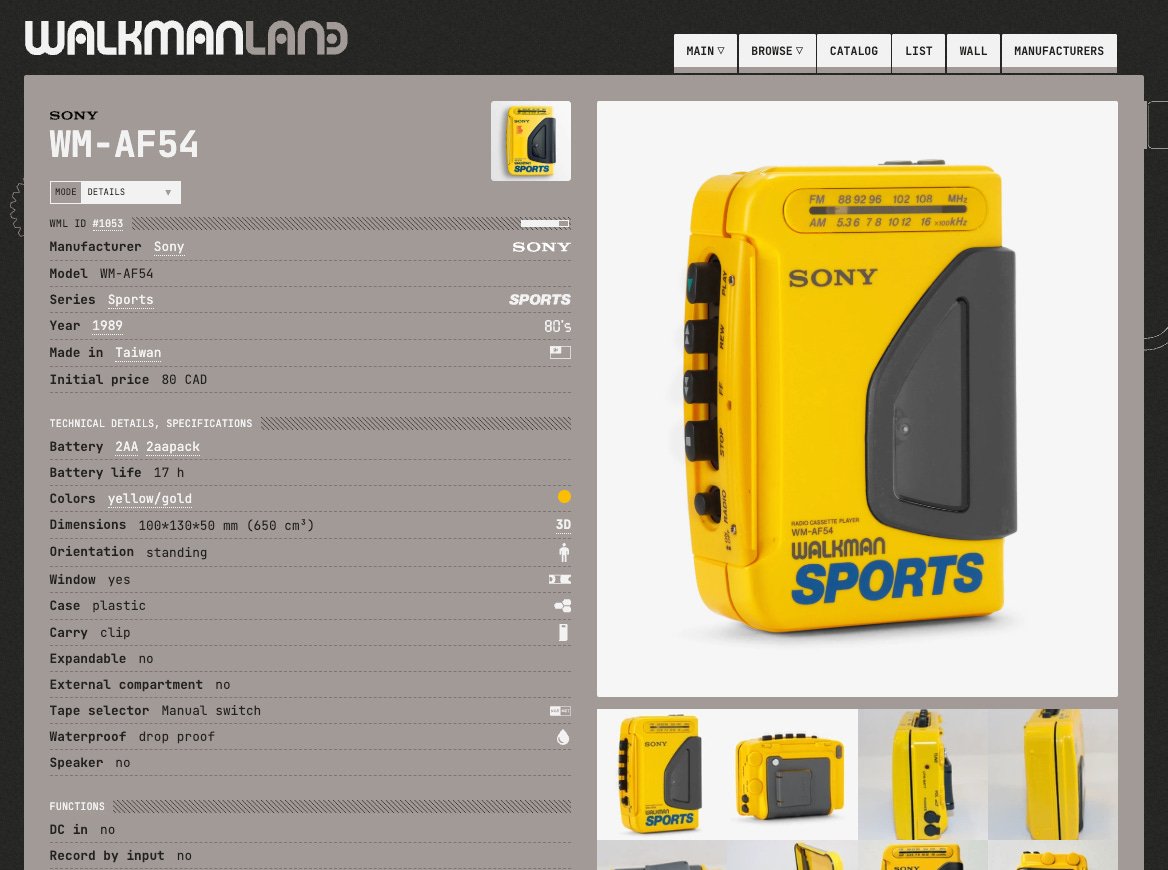
WalkmanLand: Careful with this one if you are Gen X, you will go down a rabbit hole. It’s a catalogue archiving Walkmans, including my precious WM-AF54 Sports model.